Downtown Seattle Dentists
Sleep Apnea Treatment in Downtown Seattle

Sleep Apnea Treatment at Downtown Seattle Dentists
Sleep apnea affects roughly one in four adults at some point in their lives, and many more deal with chronic snoring. Both conditions can disrupt sleep, leave you tired during the day, and contribute to long-term health concerns including high blood pressure, heart disease, and stroke risk. At Downtown Seattle Dentists, we offer oral appliance therapy as a comfortable, effective alternative or supplement to CPAP for patients with mild to moderate sleep apnea or chronic snoring.
Treatment starts with a diagnosis from a sleep specialist or physician. Once you have a sleep study and a confirmed diagnosis, we can custom-fit an oral appliance that gently repositions your jaw to keep your airway open while you sleep. We coordinate with your medical team to make sure the appliance fits into your broader sleep apnea care plan.
Symptoms worth paying attention to
Sleep apnea is frequently spotted by a partner long before the patient suspects anything. If any of the following sound familiar, a sleep evaluation is worth scheduling:
- Snoring loud enough to wake you or someone else
- Choking or gasping awake during the night
- Sleepiness that persists no matter how long you were in bed
- Headaches on waking, or a dry mouth and raw throat first thing
- Brain fog, forgetfulness, or a shorter fuse than usual
- Blood pressure that stays high despite treatment
Already have a diagnosis and looking for an alternative to CPAP? We can pick things up from there.
What Is Sleep Apnea Oral Appliance Therapy?
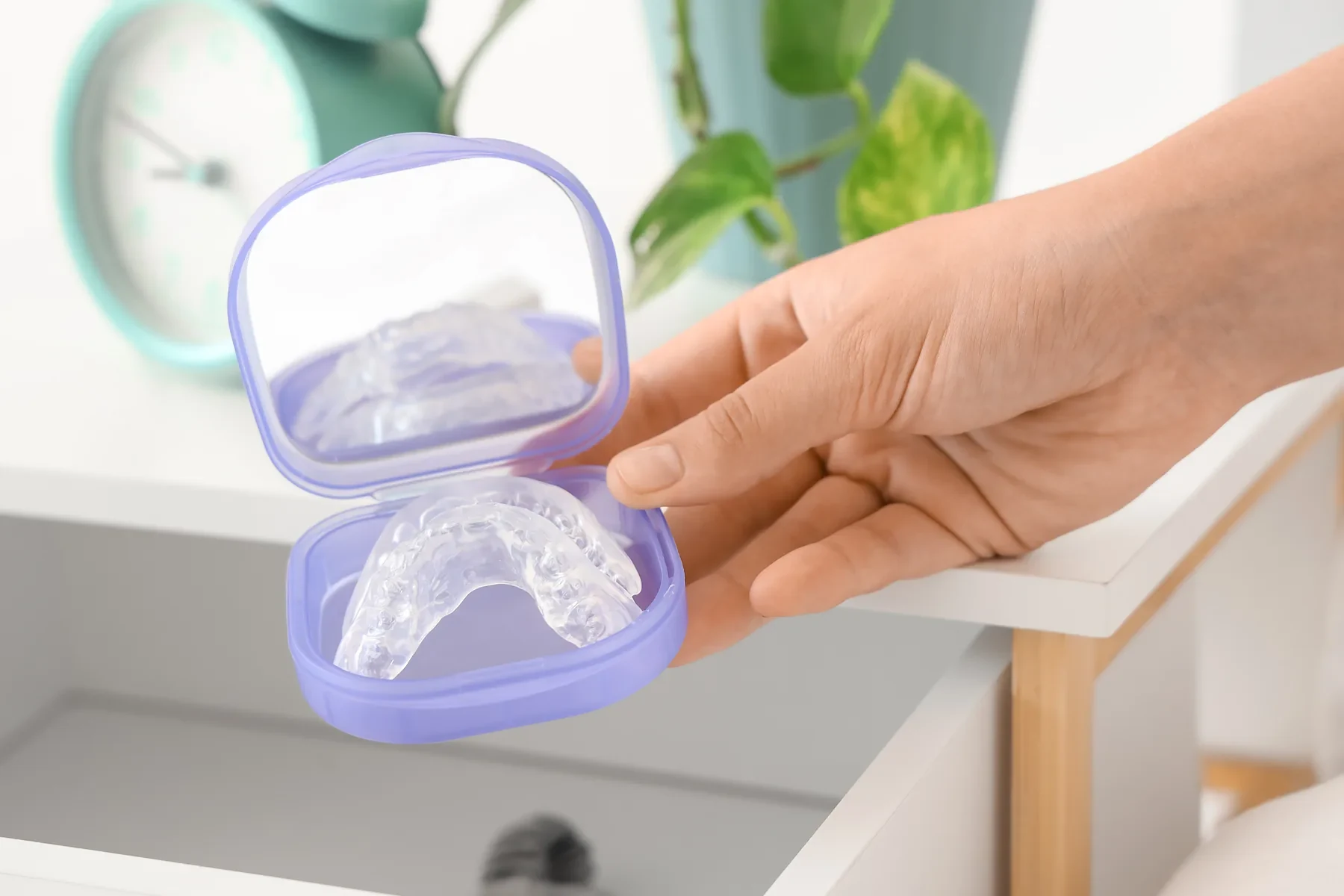
Oral appliance therapy uses a custom-fitted device, worn only at night, to keep your airway open while you sleep. The device looks similar to a sports mouth guard or orthodontic retainer and works by gently holding your lower jaw in a slightly forward position. This forward position prevents the soft tissues at the back of your throat from collapsing and blocking the airway, which is what causes the breathing pauses and loud snoring associated with sleep apnea.
Oral appliance therapy is recommended by the American Academy of Sleep Medicine as a first-line treatment for mild to moderate obstructive sleep apnea and for snoring. For patients with severe sleep apnea who cannot tolerate CPAP, an oral appliance can also be a meaningful alternative, ideally in coordination with your sleep physician.

Oral Appliance vs. CPAP: How They Compare
CPAP (continuous positive airway pressure) machines are the most well-known sleep apnea treatment. They use pressurized air through a mask to keep the airway open. CPAP is highly effective when used consistently, but many patients struggle with the mask, the noise, the hose, or simply the inconvenience. Studies consistently show that long-term CPAP compliance is around 50 percent.
Oral appliances offer a different option. They are small, quiet, portable, and easier to use night after night. For mild to moderate cases, they often provide effective treatment without the bulk of a CPAP machine. For severe cases or patients with established CPAP intolerance, an oral appliance can be a practical alternative your sleep doctor may recommend.
When an oral appliance may be a good fit:
- You have been diagnosed with mild to moderate obstructive sleep apnea
- You snore loudly enough to disrupt your sleep or your partner’s
- You have tried CPAP but cannot tolerate the mask, hose, or pressure
- You travel frequently and need a portable sleep apnea solution
- You prefer a quieter, simpler option than CPAP
Frequently Asked Questions
What is sleep apnea?
Sleep apnea is a sleep disorder where your breathing repeatedly stops and starts during sleep, usually because the soft tissues at the back of your throat collapse and block your airway. It causes loud snoring, disrupts sleep, leaves you tired during the day, and over time can contribute to high blood pressure, heart disease, and stroke risk.
What is an oral appliance for sleep apnea?
An oral appliance is a custom-fitted device worn at night that looks like a sports mouth guard or retainer. It gently holds your lower jaw in a slightly forward position to keep your airway open while you sleep. Treatment is recommended for mild to moderate obstructive sleep apnea and for chronic snoring.
Do I need a sleep study first?
Yes. Sleep apnea is a medical diagnosis. Before we can fit you for an oral appliance, you need a confirmed diagnosis from a sleep specialist or physician, typically based on a sleep study (which can often be done at home). If you haven’t had a sleep study yet, we can refer you to a trusted sleep clinic in the area.
Is an oral appliance more comfortable than CPAP?
For most patients, yes. Oral appliances are small, quiet, portable, and easier to use consistently. CPAP is highly effective when used as prescribed, but many patients struggle with the mask, hose, or pressure. An oral appliance can be either an alternative to CPAP for milder cases or a backup for patients who cannot tolerate CPAP.
Does the oral appliance also help with snoring?
Yes. Snoring and sleep apnea share the same underlying cause: airway collapse during sleep. An oral appliance opens the airway and reduces or eliminates snoring in most patients, which often improves sleep quality for both you and your partner.
How much does sleep apnea oral appliance therapy cost?
Cost varies depending on the type of appliance and your case. Medical insurance often covers a significant portion of oral appliance therapy when prescribed for sleep apnea, since it is considered a medical (not dental) treatment. We provide a clear cost estimate and help you understand your coverage before treatment begins.
Does insurance cover sleep apnea oral appliances?
Often, yes. Because sleep apnea is a medical condition, medical insurance (not dental insurance) typically covers oral appliance therapy when it is prescribed by a sleep physician. Coverage details vary by plan. Our team helps you navigate the process.
How long does the appliance last?
A well-cared-for oral appliance typically lasts three to five years. We monitor the fit at follow-up visits and adjust as needed. Eventually, all oral appliances wear out and need to be replaced, similar to a night guard or retainer.
Can the oral appliance cause any side effects?
Most patients adjust comfortably. Some experience mild jaw soreness, dry mouth, or extra saliva for the first week or two as their mouth adjusts to wearing the appliance. We monitor your fit and comfort at follow-up visits and adjust as needed.
How the Sleep Apnea Treatment Process Works
Step 1: Sleep Study and Diagnosis
Treatment starts with a confirmed sleep apnea diagnosis from a sleep specialist or physician. If you have not been evaluated yet, we can refer you to a trusted sleep clinic for a sleep study (which can often be done at home).
Step 2: Consultation at Downtown Seattle Dentists
Once you have your sleep study results, we review the diagnosis, discuss whether oral appliance therapy is a good fit for your case, and answer any questions. If we recommend moving forward, we explain the cost, timeline, and what to expect.
Step 3: Custom Fitting
We take digital impressions or scans of your teeth to design an appliance that fits your bite precisely. A well-fitted appliance is the difference between comfortable nightly use and a device that ends up in a drawer.
Step 4: Receiving and Adjusting Your Appliance
When your appliance is ready, we fit it, adjust it for comfort, and walk you through how to wear it, care for it, and gradually adjust the jaw position over time for optimal results.
Step 5: Follow-Up and Coordination
We schedule follow-up visits to make sure the appliance is working well, and we coordinate with your sleep specialist for follow-up sleep studies if needed to confirm effectiveness.