Downtown Seattle Dentists
Dental Implants in Downtown Seattle

Dental Implants at Downtown Seattle Dentists
Dental implants are the closest modern dentistry comes to replacing a natural tooth. A small titanium post is placed in the jawbone where the tooth used to be. Over the course of several months, the bone fuses around the implant, creating a stable foundation that holds a custom crown, bridge, or denture in place. The result looks, feels, and functions much like a natural tooth. Implants also help preserve the jawbone, prevent neighboring teeth from shifting, and last for decades when properly cared for.
At Downtown Seattle Dentists, we provide a comprehensive range of implant services in our downtown office: single tooth implant placement, bone grafting when the jaw needs preparation, and implant-supported dentures (sometimes called snap-on dentures) for patients missing all of the teeth in an arch. We serve patients across downtown Seattle, Belltown, First Hill, Capitol Hill, South Lake Union, and the surrounding neighborhoods.
What Is a Dental Implant?
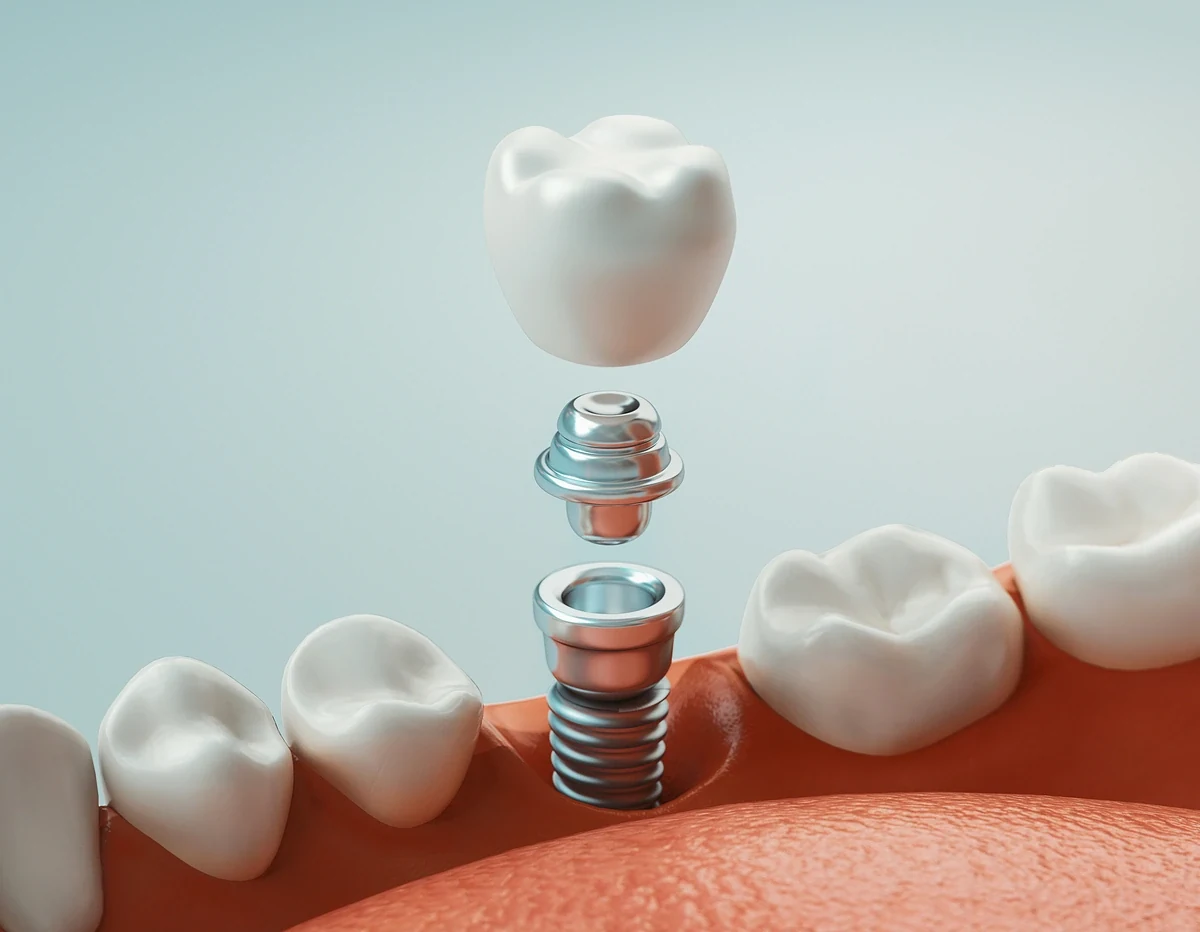
A complete dental implant has three parts. The implant post is a small titanium screw placed in the jawbone, where it acts as the root of the new tooth. The abutment is a small connector piece on top of the post. The crown (or bridge, or denture) is the visible part that completes the restoration and matches your natural teeth.
Because the titanium post integrates with your bone (a process called osseointegration), the implant becomes a permanent part of your jaw and functions much like a natural tooth root. You brush and floss normally, eat normally, and the implant helps maintain the bone in your jaw the same way a natural tooth root would.

Implant Services We Offer
Single Tooth Implants
A single tooth implant replaces one missing tooth with a permanent, natural-looking restoration. Even one missing tooth can change your bite over time. Surrounding teeth may shift toward the gap, and the tooth above or below may begin to drift without a partner to chew against. A single implant fills the space, preserves the bone, and keeps the rest of your smile stable.
- Permanent replacement for a single missing tooth
- Looks and functions much like a natural tooth
- Helps preserve the jawbone and prevent neighboring teeth from shifting
- Brushed, flossed, and maintained like your other teeth
Implant-Supported Dentures
Implant-supported dentures (sometimes called snap-on dentures) combine the secure foundation of dental implants with the coverage of a full denture. Two or more implants are placed in the jaw, and a custom denture snaps or screws into place on top. The result is a denture that does not slip while eating or speaking, fits more securely than a conventional denture, and helps preserve the jawbone over time. Many patients describe it as feeling like a major upgrade from a traditional denture.
- Snap-on stability with no slipping during eating or speaking
- No need for denture adhesive
- Helps preserve jawbone density over time
- Available as removable (snap-on) or fixed (permanent) options
- Suitable for patients missing all of the teeth in an arch
Bone Grafting
When a tooth has been missing for a long time, the jawbone in that area can shrink and lose density. Bone grafting rebuilds that bone so it can support an implant. We use bone graft material to fill in areas where the bone has thinned, then allow the area to heal before the implant is placed. Bone grafting is often a planned first step on the path to a successful implant.
- Rebuilds jawbone density in areas thinned by tooth loss
- Performed in-office, typically under local anesthesia
- Healing time before implant placement varies by case
- Often the difference between being a candidate for implants and not being one
Frequently Asked Questions
What is a dental implant?
A dental implant is a small titanium post placed in the jawbone to replace the root of a missing tooth. Once the bone fuses with the post, it serves as a permanent foundation for a custom crown, bridge, or denture. Implants look, feel, and function much like natural teeth.
How long do dental implants last?
With good home care and regular dental visits, the implant post is designed to last for decades, often a lifetime. The crown, bridge, or denture attached to the implant may need to be replaced every ten to fifteen years, similar to standard restorations on natural teeth.
Is the implant procedure painful?
The placement itself is performed under local anesthesia, so most patients feel pressure but not pain during the procedure. We also offer nitrous oxide or oral sedation if you would like extra comfort. Some swelling and soreness for a few days afterward is normal and usually well managed with over-the-counter pain medication.
How much do dental implants cost in Seattle?
Cost depends on how many teeth you are replacing, whether bone grafting is needed, and the type of final restoration. We provide a clear, written cost estimate during your consultation along with CareCredit financing options for patients who want to spread payments over time.
Does insurance cover dental implants?
Coverage varies widely by plan. Some plans cover a portion of the implant placement, the abutment, or the final restoration, while others cover little or none of the cost. Our team verifies your specific benefits and walks you through what to expect financially before treatment begins.
What is bone grafting and do I need it?
Bone grafting rebuilds jawbone density in areas where the bone has thinned, usually from a tooth being missing for a long time. Whether you need a graft depends on the condition of your jaw, which we evaluate during your consultation. Many patients do well without a graft. Others need one to become candidates for a successful implant.
What are implant-supported dentures?
Implant-supported dentures (also called snap-on dentures) use two or more dental implants to securely hold a denture in place. They do not slip while eating or speaking, do not require adhesive, and help preserve the jawbone over time. They are a popular option for patients missing all of the teeth in an upper or lower arch.
Do you offer All-on-4 or full-arch fixed implant bridges?
For most patients missing a full arch, implant-supported (snap-on) dentures are an excellent option that we provide in-house. For All-on-4 or fixed full-arch implant bridges specifically, we evaluate your case during the consultation and coordinate with a trusted specialist if that is the better option for you.
Am I a candidate for dental implants?
You may be a good candidate if you are missing one or more teeth, have generally healthy gums, and have enough jawbone (or are open to bone grafting). Smokers and patients with uncontrolled diabetes or other systemic conditions may need additional planning. We evaluate every candidate individually during the consultation.
How long does the entire implant process take?
A single tooth implant typically takes three to six months from start to finish. The placement appointment is short, but the jawbone needs time to fuse with the implant before the final restoration is placed. If bone grafting is needed first, the overall timeline is longer.
The Dental Implant Process at Downtown Seattle Dentists
Step 1: Consultation and Treatment Planning
We review your medical and dental history, examine the area, take any necessary X-rays, and discuss your goals. You leave with a clear plan, a realistic timeline, and a written cost estimate before any work begins.
Step 2: Preparation (Bone Grafting if Needed)
If the area needs additional bone support before the implant can be placed, we plan a bone graft as the first step. Healing time varies by case, but the result is a stable foundation for a successful implant.
Step 3: Implant Placement
On the day of placement, the area is fully numbed for your comfort. The titanium implant post is carefully positioned in the jawbone at the right angle and depth. Most single implant placements take about an hour. We discuss sedation options if you would like extra comfort during the procedure.
Step 4: Healing
After placement, your jawbone fuses with the implant over the course of three to six months. You may wear a temporary tooth replacement during this period so there is no visible gap. We schedule follow-up visits to monitor healing.
Step 5: Final Restoration
Once your implant has fully integrated with the bone, we attach the abutment and place your custom crown, bridge, or denture on top. We fine-tune the bite and finish, and you walk out with a restoration that looks, feels, and functions much like a natural tooth.