Downtown Seattle Dentists
Dental Crowns and Bridges in Downtown Seattle

Crowns and Bridges at Downtown Seattle Dentists
Crowns and bridges are two of the most common restorative treatments in dentistry. A crown fully covers a damaged or weakened tooth to restore its strength and appearance. A bridge replaces one or more missing teeth by anchoring an artificial tooth to the natural teeth or crowns on either side of the gap. Both are designed to look natural, hold up to normal chewing, and protect the rest of your smile.
At Downtown Seattle Dentists, our restorative team includes Dr. Ryan Guske, who earned the Fixed Prosthodontics Excellence in Tooth Preparation Award during his Doctor of Dental Surgery training at the University of Washington. That award recognizes the careful, precise tooth preparation that makes the difference between a crown or bridge that fits, functions, and lasts versus one that requires constant adjustment. We plan and execute every crown and bridge case with that same level of attention.
We serve patients across downtown Seattle, Belltown, First Hill, Capitol Hill, South Lake Union, and the surrounding neighborhoods.
Dental Crowns
A dental crown is a custom-made cap that covers the entire visible surface of a tooth. Crowns are designed to restore strength, shape, and function to a tooth that has been weakened by decay, fractures, large fillings, or wear from grinding. They are also used to cover discolored or misshapen teeth for cosmetic reasons, or to complete root canal treatment by protecting the treated tooth long-term.
Common reasons to need a crown:
- A tooth with deep decay that is too compromised for a filling
- A cracked or fractured tooth that needs to be held together
- A worn-down tooth from grinding or age
- A tooth that has undergone root canal therapy and needs long-term protection
- A tooth with a large existing filling that is no longer holding up
- A misshapen or discolored tooth that other cosmetic treatments cannot resolve

Dental Bridges
A dental bridge replaces one or more missing teeth with a permanent prosthetic that anchors to the natural teeth on either side of the gap. The artificial tooth (called a pontic) sits in the empty space, with crowns on the neighboring teeth holding everything in place. Bridges restore your bite, prevent surrounding teeth from drifting into the open space, and give you back the look and feel of a complete smile.
Common reasons to consider a bridge:
- Replacing a single missing tooth without using an implant
- Replacing several missing teeth in a row
- Preventing neighboring teeth from shifting into a gap
- Restoring chewing function across the missing space
- Improving the appearance of your smile when a tooth has been missing for some time
Frequently Asked Questions
How long do dental crowns and bridges last?
With good home care and regular dental visits, most crowns and bridges last ten to fifteen years, and many last longer. Brushing, flossing (including under and around bridges), and avoiding biting hard objects like ice or pen caps will protect them well past the minimum lifespan.
How much do crowns and bridges cost in Seattle?
Cost depends on the tooth being treated, the material used, and whether you need a single crown or a multi-tooth bridge. Insurance often covers part of the cost when the restoration is medically necessary. We provide a clear, written cost estimate during your consultation along with CareCredit financing options.
Does insurance cover crowns and bridges?
Most major PPO dental plans cover a portion of crowns and bridges, especially when the restoration is restoring function (not purely cosmetic). Coverage varies by plan. Our team verifies your specific benefits before treatment begins.
Is the crown or bridge procedure painful?
No. The tooth preparation is performed under local anesthesia, so most patients feel pressure but not pain during the visit. We also offer nitrous oxide or oral sedation if you would like extra comfort. Mild sensitivity for a day or two afterward is normal and usually resolves on its own.
How many appointments does a crown or bridge take?
Most crowns and bridges are completed in two appointments: a preparation visit (we shape the tooth, take impressions, and place a temporary) and a placement visit (we cement the final restoration). Complex cases may require additional follow-up.
Why would I choose a bridge instead of an implant?
A bridge is faster to complete than an implant (about two weeks instead of several months) and does not require oral surgery. Bridges are also a better option for patients with limited jawbone for an implant. The trade-off is that bridges require shaping the neighboring teeth, while implants do not.
Will my crown or bridge look natural?
Yes. We match the color, translucency, and shape to your existing teeth so the restoration blends seamlessly. For front teeth especially, we use high-translucency porcelain that closely mimics the look of natural enamel.
What if my crown or bridge feels uneven after placement?
Tell us. A small bite adjustment usually resolves it quickly. We would rather you come back for a five-minute tweak than live with a bite that does not feel right.
Can I eat normally with a crown or bridge?
Yes. Once your permanent crown or bridge is in place, you can eat your normal diet. We recommend avoiding very hard foods directly on the new restoration for the first few days, then resuming everything as usual.
Materials, Design, and What to Expect
Custom Materials and Design
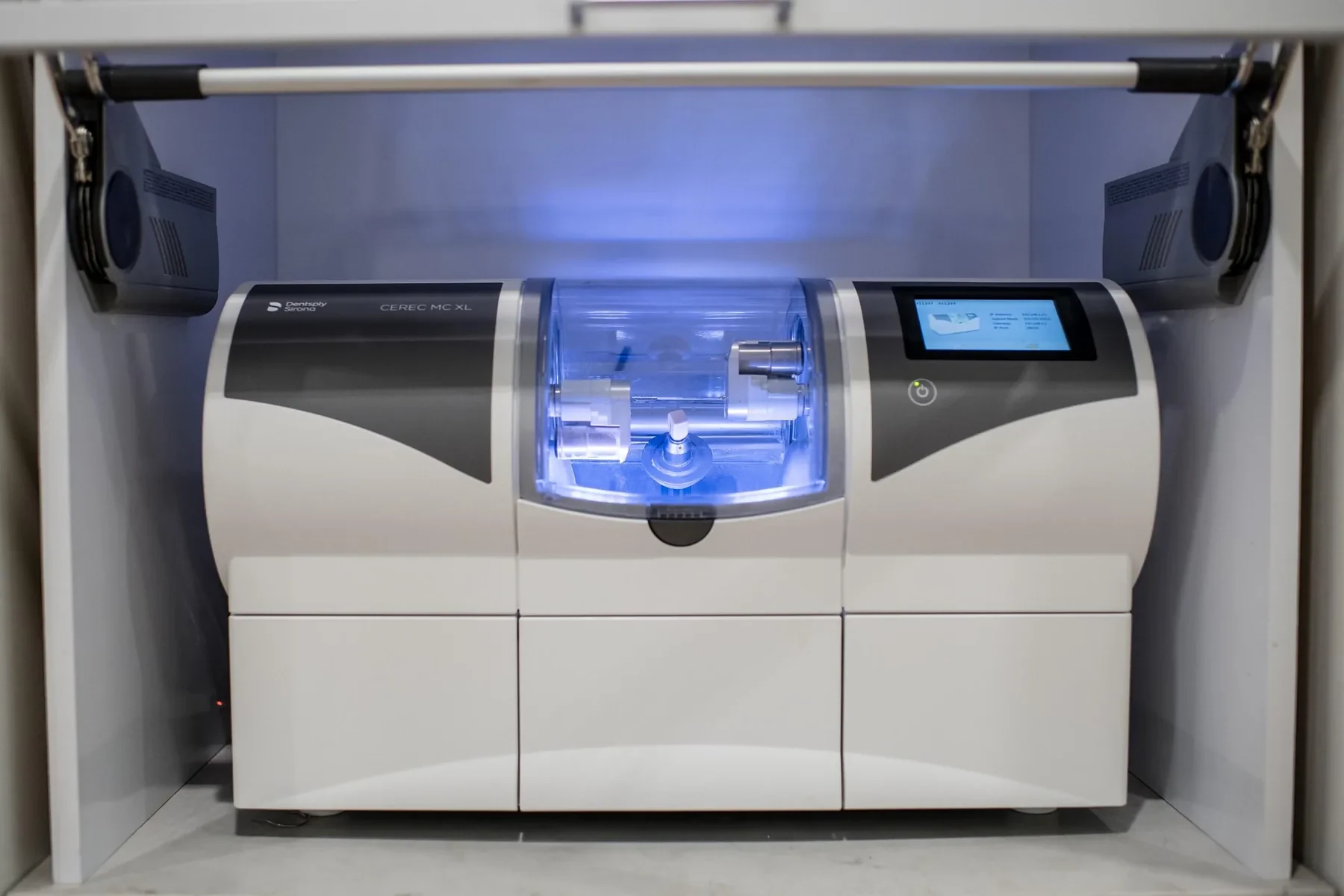
Modern crowns and bridges are made from durable, tooth-colored ceramic materials designed to match your existing teeth. We choose materials based on which tooth is being restored, how much chewing force the area handles, and what will hold up best long-term. For front teeth, where appearance matters most, we use high-translucency porcelain that mimics natural enamel. For molars, where strength matters most, we use materials that resist wear and pressure.
Every restoration is shaped, colored, and fitted to your bite. Before final placement, we check the fit, the color match against your surrounding teeth, and the way it feels when you bite down. If anything needs to be adjusted, we adjust it on the spot.
What to Expect at Your Crown or Bridge Appointment
Comprehensive exam. We examine the tooth or area of concern, take X-rays if needed, and discuss your goals. If you have a damaged tooth, we evaluate whether a crown is the right protection. If you are missing one or more teeth, we discuss whether a bridge or an implant is the better fit.
Preparation and impressions. For a crown, we gently shape the affected tooth so the crown can fit securely over it. For a bridge, we shape the teeth on either side of the gap (the anchor teeth). Then we take digital impressions to send to the lab where your custom restoration is fabricated. Dr. Guske’s award-winning tooth preparation is what makes the difference between a restoration that fits perfectly and one that does not.
Temporary crown or bridge. You leave the preparation visit with a temporary crown or bridge that protects your teeth and maintains your bite while the permanent restoration is being made. Most patients eat and live normally with the temporary in place.
Placement of the final restoration. When your permanent crown or bridge is ready, we check the color, fit, and feel before bonding it in place. If anything needs to be adjusted, we adjust it during the same appointment.
Long-term care. Brush twice a day, floss daily (including under bridges with a floss threader or interdental brush), and keep your routine dental visits. With good home care, your restoration should serve you well for many years.