Dental Implants in South Lake Union, Seattle
Full-Service Implant Dentistry, All Under One Roof

The Most Durable, Most Natural-Feeling Way to Replace a Missing Tooth
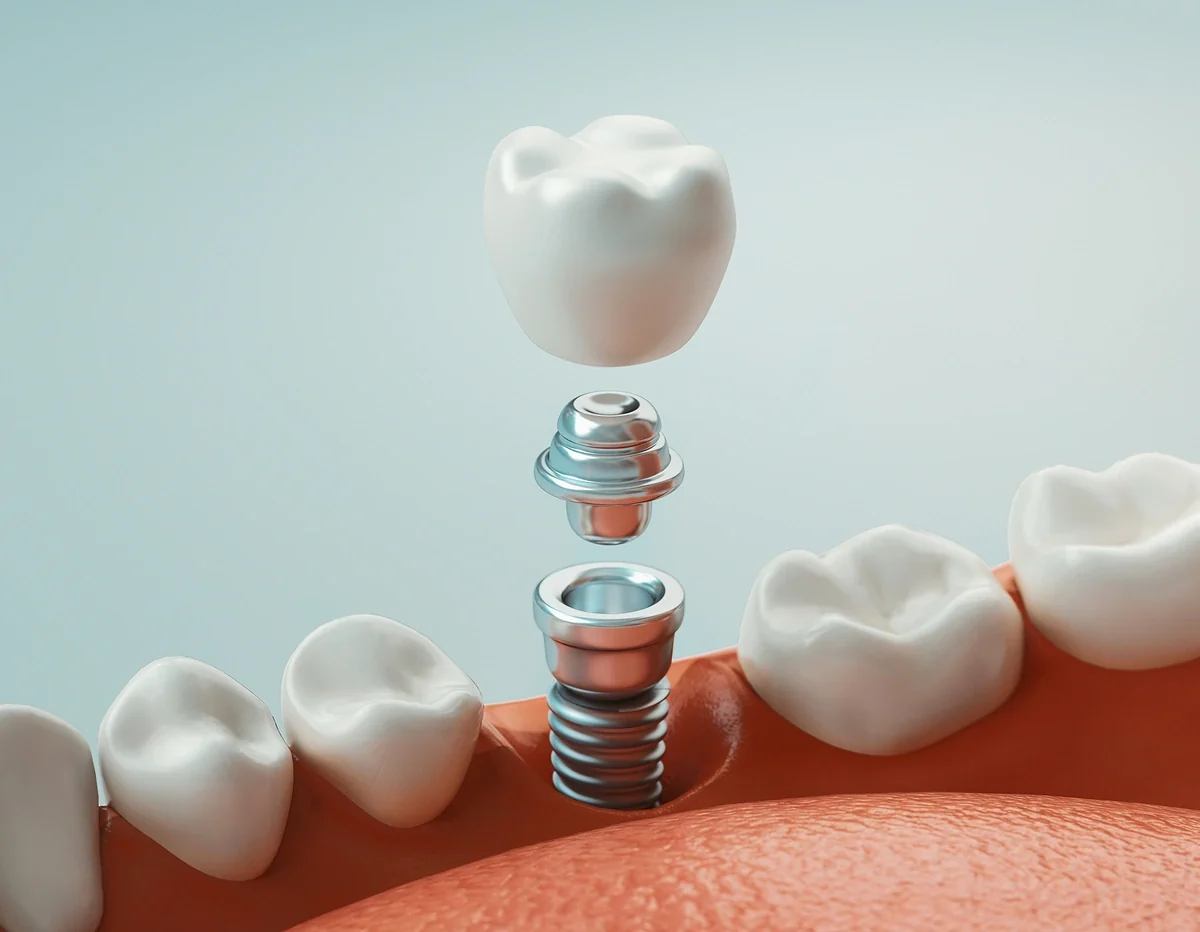
A dental implant is a small titanium post placed in your jawbone where a tooth used to be. Over a few months, the bone fuses to the post, creating a foundation as solid as the root of a natural tooth. A custom crown is then attached on top.
Implants restore your ability to chew and speak normally, preserve the jawbone (which shrinks over time when a tooth is missing), prevent neighboring teeth from drifting, and bring back the look of a complete smile. Cared for properly, an implant can last the rest of your life.
Start with a Free, No-Pressure Consultation
Implant decisions are not small ones. We offer free implant consultations specifically so you can sit down with a dentist, look at your situation honestly, and understand all your options before any commitment. At your consultation, we will evaluate the area in question, take X-rays as needed, talk through your goals, and lay out a clear treatment plan with a written estimate.
If implants are not the right tool for your situation, we will tell you that, too.

Your Dentist Places the Implant, and Restores It
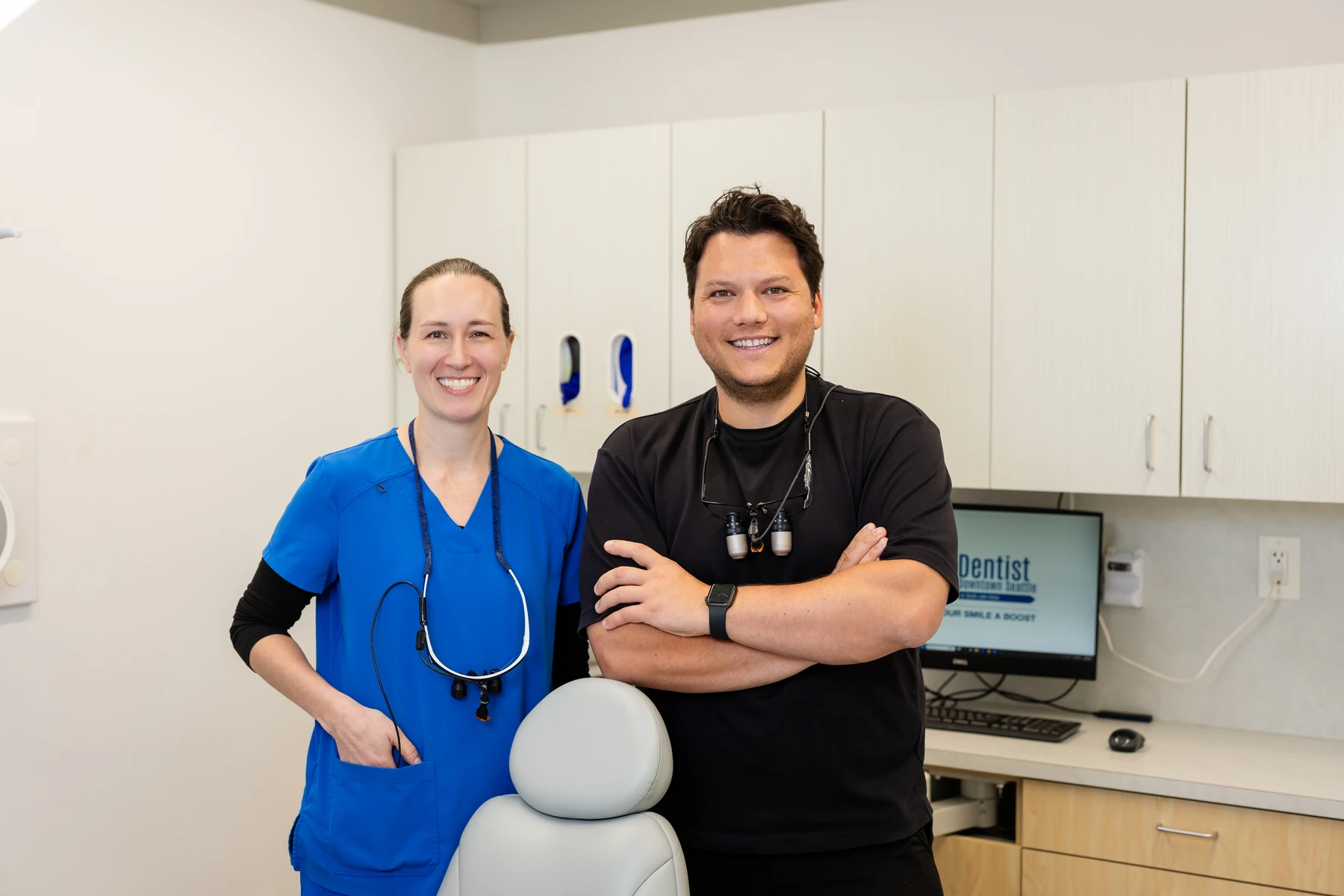
Many dental offices place implants in coordination with an outside specialist, which means juggling appointments across two offices and two billing departments. At Dentist Downtown Seattle, your implant placement and your final crown are handled by the same team in the same office, which means fewer trips, simpler scheduling, and one team that knows your case from start to finish.
Conditions we treat with implants:
- Single missing tooth (one implant + one crown)
- Multiple missing teeth in a row (implant-supported bridge)
- Loose, ill-fitting dentures (implant-supported / "snap-on" dentures)
- Tooth that needs to be extracted and replaced
- Full-arch replacement of multiple missing teeth
Frequently Asked Questions
Is the implant consultation really free?
Yes. We offer free implant consultations so you can get a clear understanding of your options and a written estimate before any commitment.
How long does the full implant process take?
From extraction or grafting through final crown, most cases take four to nine months. Simple cases without grafting can move faster.
Does it hurt to get an implant?
No. Placement is performed under local anesthetic and most patients report less soreness afterward than they expected. Sedation is available if you prefer extra ease.
How much does a dental implant cost?
Cost depends on whether grafting is needed, the type of restoration on top, and how many teeth you are replacing. We provide a clear written estimate at your free consultation. CareCredit financing is available.
Does insurance cover implants?
Coverage varies. Many PPO dental plans, including the dental plans used by Microsoft, Google, and Amazon employees, cover a portion of implant treatment, especially when a tooth needs to be replaced after extraction. We verify your benefits before treatment.
What is the difference between an implant and a bridge?
A bridge attaches crowns to your existing neighboring teeth to span the gap. An implant is a freestanding replacement that does not involve the neighboring teeth. Bridges are typically faster and less expensive; implants are longer-lasting and preserve the bone better. We will help you compare them honestly.
Am I a candidate for an implant?
Most adults with healthy gums and adequate bone are candidates. If your bone has shrunk, bone grafting can rebuild the foundation. We confirm candidacy at your free consultation.
Can implants replace all of my teeth?
Yes. Implant-supported dentures (sometimes called "snap-on" dentures) use a small number of implants to anchor a full denture securely, eliminating the slippage and loose fit of traditional dentures.
How do I take care of an implant?
Like a natural tooth: brush twice a day, floss daily (a water flosser is especially helpful), and keep your routine cleanings. Implants do not get cavities, but the gum tissue around them needs to stay healthy.
What if my implant fails?
Implant failure is uncommon when placement and follow-up care are done well. If it happens, we work with you to identify the cause, treat the area, and (in most cases) replace the implant.
Bone Grafting When You Need It
A dental implant needs a strong foundation of bone to anchor into. When a tooth has been missing for a long time, or when an extraction has left a thin or short section of bone, the jaw may not have enough bone to support an implant on its own. Bone grafting solves that problem by adding bone material to the site, allowing your body to build up the area into a foundation strong enough for an implant.
When bone grafting may be recommended:
- You have been missing a tooth for many years and the bone has shrunk (resorbed)
- You are having a tooth extracted and want to preserve the site for a future implant (socket preservation)
- Your existing bone is too thin or too short for a standard implant
- A previous implant has failed and the site needs to be rebuilt
What bone grafting involves
A small amount of bone material (most often a safe, processed bone substitute) is placed at the site and covered. Over the next several months, your body grows new bone into the graft material, integrating it with your existing jawbone. Once the site has healed, the implant can be placed into the now-strong foundation.